7 Best Mushrooms to Grow Indoors for Beginners in 2026
I still remember the morning I walked into my kitchen and saw a cluster of pale oyster mushrooms pushing out of a plastic bag on the counter. I had watered them twice a day for ten days, misting like a maniac, half-convinced nothing would happen. Then, there they were—fleshy, frilly, and undeniably alive. That moment hooked me on indoor mushroom growing, and in 2026, it’s easier than ever to start. New kits, better LED setups, and a thriving online community mean you can go from zero to a harvest in under a month. Here are the seven best mushrooms to grow indoors for beginners this year, based on what I’ve actually tried and what consistently works.
Why 2026 Is the Perfect Year to Start Growing Mushrooms Indoors
If you’ve been on the fence about growing mushrooms indoors, 2026 is the year to jump in. The home-growing scene has exploded, and with it come better tools, clearer instructions, and more forgiving varieties. Pre-sterilized grow kits now cost less than a dinner out, and many include substrate blocks ready to mist. LED strip lights with timers are cheap on Amazon, and humidity domes are easy to rig from a clear storage bin. Online forums and YouTube channels have matured past the “bro-science” phase; you can find real, tested advice from home growers who share exact room temperatures, spray schedules, and photos of failures. The community is genuinely helpful—I’ve gotten replies within hours on a Reddit thread about yellowing caps. Plus, the pandemic-era supply chain issues that made some mushroom supplies hard to find are long gone. In 2026, if you want to grow, you can. The only real barrier is deciding which mushroom to start with.
What Every Beginner Needs to Know Before Choosing a Mushroom Variety
Before you pick a mushroom, you need to match it to your home. Not all mushrooms want the same thing, and failure usually comes from ignoring basic conditions. Here’s the cheat sheet:
- Substrate: This is what the mushroom eats. Oysters love straw or coffee grounds; shiitake prefers hardwood sawdust; lion’s mane does well on supplemented sawdust blocks. Kits come with pre-inoculated substrate, so you don’t have to sterilize anything yourself—just open and mist.
- Humidity: Most indoor mushrooms need 80–95% relative humidity. That sounds intense, but a simple clear plastic bag with a few holes or a dome works. I keep a hygrometer in my grow corner; if it dips below 70%, I mist the sides of the bag.
- Temperature: Each species has a sweet spot. Oysters fruit best at 60–75°F; shiitake likes it cooler, around 55–65°F. Lion’s mane is forgiving at 65–75°F. Your basement or closet temperature will dictate your choice—don’t fight it.
- Light: Mushrooms don’t need sunlight for photosynthesis, but they need indirect light to trigger pinning (the formation of tiny mushroom primordia). A north-facing window or a $15 LED strip on a 12-hour timer works perfectly.
- Air exchange: Stale air leads to mold and leggy mushrooms. A fan on low, pointed away from the grow area, helps. I open my grow bag twice a day to exchange air.
One counter-intuitive tip: don’t overwater. I killed my first batch of shiitake by misting so much that water pooled in the bag. The mushrooms rotted before they fully formed. Less is more—mist the sides of the bag, not the mushrooms directly, and let dry out slightly between sprays.
The 7 Best Mushrooms to Grow Indoors for Beginners in 2026
Here’s my honest, first-hand list of the seven easiest, most rewarding mushrooms to grow indoors. I’ve grown all of these at least twice, and I’m ranking them by beginner-friendliness, speed, and flavor payoff.
1. Pink Oyster (Pleurotus djamor)
Why it’s #1: Pink oysters are absurdly fast. From kit to harvest in 10–14 days. They need high humidity (85%+) and temps around 70°F, but they’re forgiving if you slip. The flavor is mild, slightly sweet, and they cook up crispy when sautéed. Yield: about 1–2 pounds per 5-pound block. My tip: Use a humidity tent—a clear plastic bag with slits—and mist twice daily. They’ll grow in clusters so dense you’ll need to harvest with a knife.
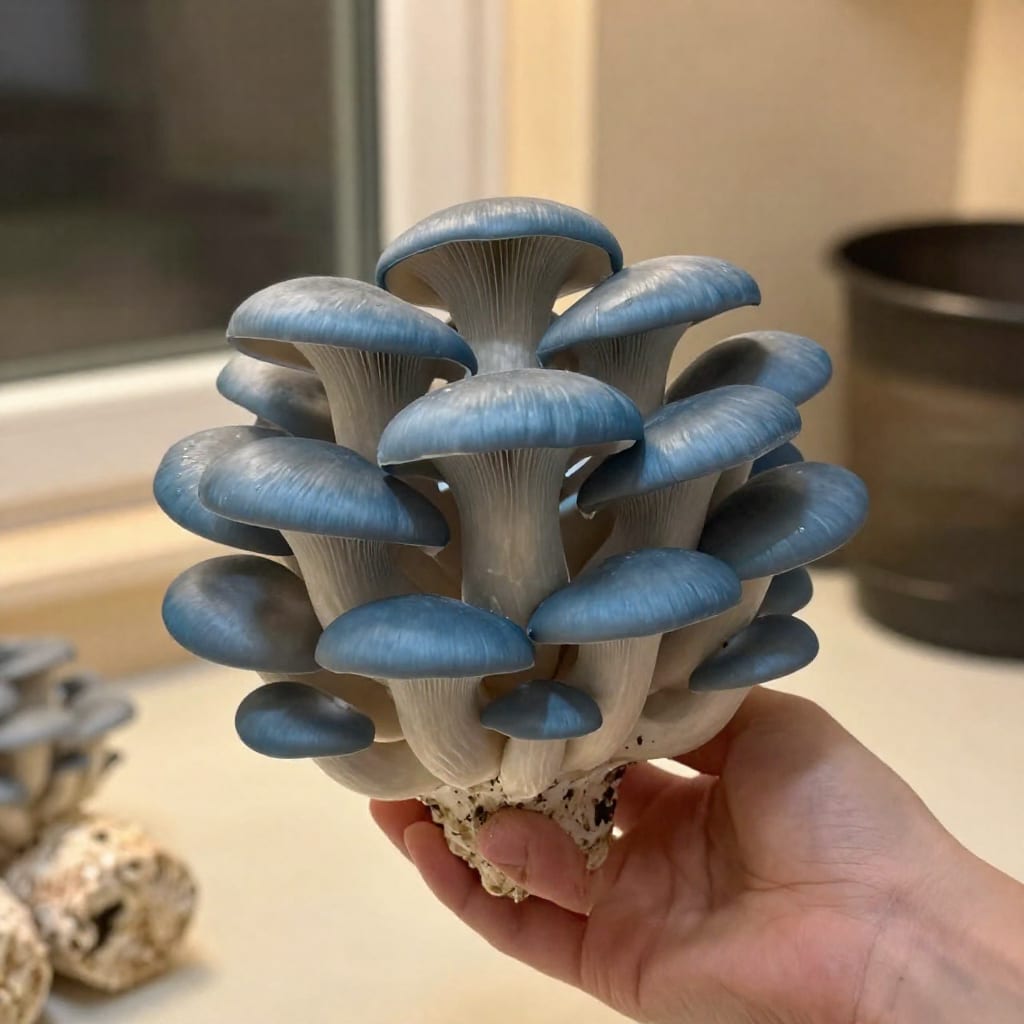
2. Blue Oyster (Pleurotus ostreatus var. columbinus)
Why it’s #2: Slightly slower than pink (14–21 days) but even more robust. Blue oysters tolerate cooler temps (55–65°F) and produce big, meaty clusters. The flavor is earthy and savory. Yield: 1.5–2.5 pounds per block. My tip: They’ll grow on straw, coffee grounds, or sawdust. I once grew a flush on spent coffee grounds from my local café—free substrate.
3. Shiitake (Lentinula edodes)
Why it’s #3: Shiitake takes longer (3–5 weeks for first harvest) and needs cooler temps (55–65°F), but the payoff is a dense, umami-rich mushroom that’s hard to find fresh in stores. Yield: 1–2 pounds per block. My tip: Use a pre-inoculated hardwood sawdust block. After harvest, soak the block in water for 12 hours to trigger a second flush. I’ve gotten three flushes from one block.
4. Lion’s Mane (Hericium erinaceus)
Why it’s #4: Lion’s mane looks like a white pom-pom and tastes like seafood—crab or lobster. It’s forgiving on temperature (65–75°F) and fruits in 2–3 weeks. Yield: 1–1.5 pounds per block. My tip: It needs a little more fresh air than oysters. I keep a fan on low nearby. Also, harvest when the spines are still short (1/4 inch) for the best texture.
5. King Oyster (Pleurotus eryngii)
Why it’s #5: King oysters have thick, meaty stems and a mild flavor. They’re slower (3–4 weeks) and need slightly warmer conditions (65–70°F). Yield: 1–2 pounds per block. My tip: They prefer a casing layer of vermiculite or peat moss on top of the substrate to pin properly. Without it, you might get fewer mushrooms.
6. Enoki (Flammulina velutipes)
Why it’s #6: Enoki is the easiest if you want a cold-tolerant mushroom. It fruits best at 45–55°F—perfect for an unheated basement or garage in winter. The long, thin stems are great in soups and stir-fries. Yield: 1–2 pounds per block. My tip: Wrap the block in a paper bag to encourage long, pale stems. Harvest before the caps flatten out.
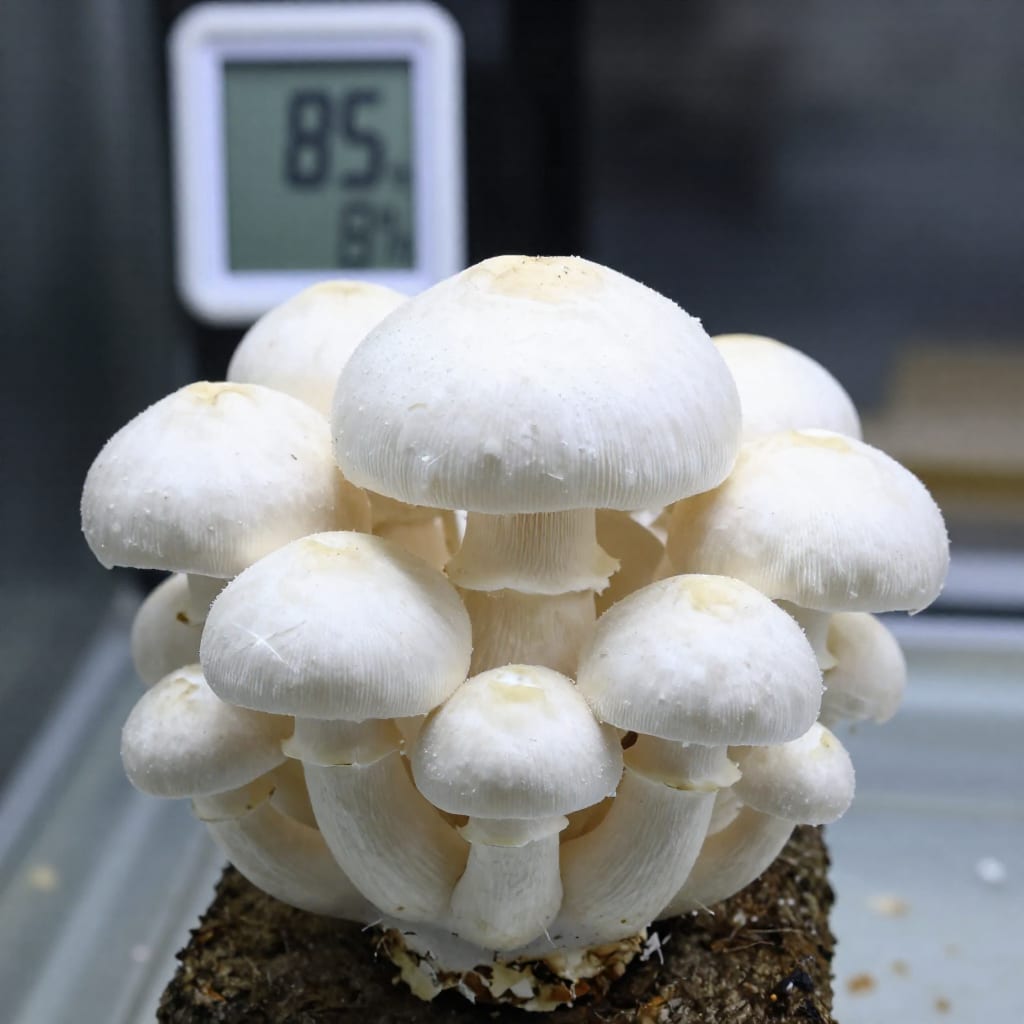
7. White Button (Agaricus bisporus)
Why it’s #7: The humble button mushroom is surprisingly tricky indoors—it needs a sterilized compost substrate and exact humidity—but modern kits have made it doable. Yield: 1–2 pounds per tray. My tip: Buy a kit that includes pre-inoculated compost and a casing layer. Keep the tray at 60–65°F and cover with plastic until pins appear. It takes 4–6 weeks, but you get classic supermarket mushrooms at home.
Simple Steps to Get Your First Mushroom Harvest in Under a Month
Ready to stop reading and start growing? Here’s the exact process I follow, and it works every time:
- Prep: Unbox your kit (or prepare your substrate). Read the instructions—each kit is slightly different. Place it in a clean, draft-free spot with indirect light.
- Inoculation (if not pre-inoculated): If you’re using spawn and substrate, mix them in a sterile container (a clean plastic tub works). Wear gloves. Seal and set aside for 7–14 days to colonize.
- Incubation: Keep the block in the dark at the recommended temperature. Don’t open it. You’ll see white mycelium spreading—that’s good.
- Fruiting: Once the block is fully white, move it to the fruiting area. Cut a small X in the bag or remove the lid. Mist the inside of the bag (not the block) twice daily. Maintain humidity above 80%. Provide 12 hours of indirect light per day.
- Harvest: When the caps flatten or the spines appear (for lion’s mane), twist and pull the cluster at the base. Do it before they drop spores (a fine white powder).
My first harvest of pink oysters came on day 13. I sautéed them in butter with garlic and thyme, and ate them on toast. It felt like magic. Worth bookmarking before your next trip to the grocery store—because once you taste homegrown, you won’t go back.
Frequently Asked Questions
What is the easiest mushroom to grow indoors for a complete beginner?
Oyster mushrooms—especially pink or blue varieties—are widely considered the easiest. They grow quickly on simple substrates like straw or coffee grounds and tolerate slight temperature fluctuations. I’ve had success with pink oysters even when my room temperature wobbled between 68°F and 74°F.
Do I need special equipment to grow mushrooms indoors?
No. A pre-sterilized grow kit and a simple spray bottle are all you need. For more advanced setups, a small humidity tent and indirect LED light help, but they’re not required for the easiest species.
How long does it take to grow mushrooms indoors from a kit?
Most beginner-friendly kits produce their first harvest in 2 to 4 weeks, depending on the variety and conditions like temperature and humidity. Pink oysters can appear in as little as 10 days.
Can I grow mushrooms indoors year-round without a lot of space?
Yes. Mushrooms can be grown in a closet, under a sink, or on a countertop. They need indirect light and consistent humidity, which can be managed with a simple plastic bag or dome. I’ve grown three varieties simultaneously on a single shelf.
Are there any mushrooms that are dangerous to grow indoors?
All the species recommended here are safe. Avoid wild-collected spores or unknown species, and always purchase from reputable suppliers to ensure non-toxic varieties.
Your Takeaway
In 2026, there’s no excuse not to try growing mushrooms indoors. Start with pink or blue oysters for a near-guaranteed success in under three weeks. Invest in a $10 hygrometer and a spray bottle, and you’re set. The thrill of that first harvest is real—and it tastes even better.